

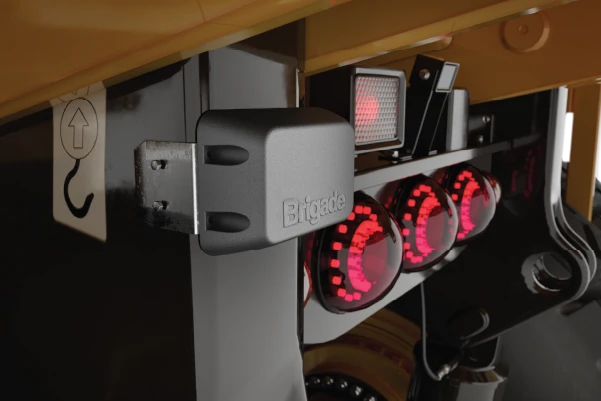
Radar & Obstacle Detection
Essential technology for harsh conditions. Obstacle detection even in dust, fog, and darkness.
How It Works
FMCW Technology
Measures the distance and speed of objects with millimetric precision.
How does it work in the field?
Radar and obstacle-detection systems produce warnings for objects around a vehicle based on distance, relative movement, and the selected danger zone. They provide an active awareness layer that complements vision systems.
Scans the zone
Sensor placement is designed to cover the vehicle's rear, side, or front risk zone.
Assesses proximity
The system produces information about approaching objects or objects in the danger zone using configured thresholds.
Delivers the warning
Distance or risk level is delivered through in-cab visual or audible warnings and, where needed, external alerts.
Where does it make the biggest difference?
Dusty and low-visibility sites
Mining, recycling, and heavy construction operations where camera visibility may not always be sufficient.
Reversing manoeuvres
Ramps, warehouses, and loading areas with heightened rear-approach risk.
Side blind spots
Pedestrian and cyclist areas that become critical during turns or lane changes.
What to consider for the right system
Zone configuration
Warning distance should match vehicle dimensions, manoeuvre speed, and the real risk area on site.
Mounting surface
Sensor angle, height, and nearby metal structures can affect detection performance during installation.
Visual confirmation
Pairing a radar warning with a camera or 360° view can help the operator interpret the situation faster.
Radar & Obstacle Detection Hardware
Recommended Brigade safety products for this vehicle type are listed below. Contact us for specific requirements.

Backsense® Configurable Radar System Kit
Backsense® System - Configurable Radar System Kit
View DetailsBacksense® 77GHz CAN-bus Network Radar
77GHz FMCW CAN-bus network object detection radar sensor for heavy-duty vehicles
View DetailsBacksense® CAN-bus Configurable Radar Sensor
CAN-bus Network Configurable & Programmable Obstacle Detection Radar Sensor
View DetailsBacksense® Selectable Range Radar System Kit
Heavy-Duty Radar System with 3m, 4.5m & 6m Selectable Detection Range
View DetailsBacksense® Fixed Range Radar Sensor Systems
Backsense® fixed range obstacle detection radar systems for dedicated distances
View Details
Backsense® Programmable On-Screen Display (OSD) Module
On-Screen Display module integrating radar detection graphics onto the in-cab camera view
View Details


Adjustable Bracket for BS-9100 Radar
Adjustable Mounting Bracket for BS-9100 Series Radar Sensors
View DetailsComplete the system approach
Technical Support for Your Project
Our specialists help define the right system architecture for your vehicle, site, and operating risk.